


The NCCR Spring Feature highlights the SEER*Stat Tools Webinar, promotes an NCI Division of Cancer Control and Population Sciences (DCCPS) funding opportunity, and presents usage statistics from the NCCR Data Platform. This edition also features upcoming CCDI webinars, the 2026 NAACCR Conference, and the 2026 NCI Data Jamboree.
SEER*Stat Tools Webinar
From Data to Discovery: Advancing Childhood Cancer Research Through the National Childhood Cancer Registry
A recent National Cancer Institute webinar titled, SEER*Stat Tools, highlighted how NCI data resources are transforming research on childhood, adolescent, and young adult (AYA) cancers through the National Childhood Cancer Registry. The session featured presentations by Johanna Goderre from NCI (National Childhood Cancer Registry NCCR Technical Lead) and Marty Krapcho from IMS (Project Manager for NCCR*Explorer and CONCORD*Explorer), with moderation by Dr. Anne-Michelle Noone from NCI.
A central focus of the discussion was the National Childhood Cancer Registry (NCCR), an initiative aimed at overcoming a core challenge in pediatric cancer research—the rarity of these diseases.
With approximately 16,000 cancer diagnoses annually among individuals under age 20 in the United States, no single institution—or even most states—has sufficient data to fully study outcomes, treatment patterns, or long-term survivorship. As emphasized by Johanna Goderre, the NCCR addresses this limitation by bringing together data from 29 participating registries, along with additional contributors through the VPR (virtual pooled registry). This national collaboration enables a more complete and longitudinal view of each patient’s cancer journey.
To support a wide range of users—from students to advanced researchers—the NCCR offers three main data products: NCCR*Explorer, NCCR Data in SEER*Stat, and NCCR Data Platform, varying levels of complexity and flexibility.
As demonstrated by Marty Krapcho, the NCCR*Explorer provides publicly available, pre-calculated statistics on incidence and survival, requiring no login or data use agreement. For more customized analyses, NCCR data are also available through SEER*Stat, enabling users to define cohorts, adjust analytic parameters, and explore trends beyond predefined outputs. At the most detailed level, the NCCR Data Platform provides access to de-identified, patient-level linked data, allowing researchers to construct longitudinal cohorts and investigate complex research questions across the cancer continuum.
Johanna Goderre highlighted that the major strength of the NCCR Data Platform is its ability to link and harmonize diverse data sources. Beyond traditional population-based registry data, the NCCR Data Platform incorporates information from claims, clinical systems, and other data providers. These linkages allow researchers to examine not only initial diagnoses and treatments, but also long-term outcomes, comorbidities, and late effects.
The NCCR Data Platform represents a significant advancement in cancer surveillance infrastructure. Through a single access point, researchers can explore available data, define cohorts, request variables, and obtain datasets for analysis.
These tools collectively support a flexible and evolving research process. Investigators can begin with exploratory analyses using public data, refine hypotheses using SEER*Stat, and ultimately conduct in-depth studies using linked, patient-level data. This ecosystem lowers barriers to entry while enabling increasingly sophisticated analyses.
The webinar also highlighted ongoing efforts to expand the utility of NCCR data, including annual data updates, growing linkages across the cancer data ecosystem, and new funding opportunities encouraging researchers to leverage these resources. As the NCCR continues to evolve, it is prepared to play a critical role in advancing understanding of childhood and AYA cancers, particularly in areas such as survivorship, treatment-related toxicity, and health disparities.
In an era where data-driven research is essential, the NCCR exemplifies how national collaboration and integrated data systems can accelerate discovery and ultimately improve outcomes for young cancer patients and survivors.
Click here to watch the recording.
NCI’s DCCPS Announces Topics of Interest for FY26 Administrative Supplements
Supporting Innovation in Cancer Control Research
Do you have a research grant with NIH? If so, you may be eligible for an administrative supplement. Current awardees of an active cancer-focused NCI-funded R01, R37, R00, P01, P30, P50, U01, UM1, UH3, U5, or U19 with at least one remaining year are eligible. Apply by July 31, 2026!
The NCI’s Division of Cancer Control and Population Sciences (DCCPS) is encouraging researchers to apply for administrative supplements on specific topics, such as using data from the National Childhood Cancer Registry (NCCR) Data Platform to further understanding of cancer survivorship, late effects, effective treatments, and other research questions among children, adolescents, and young adults with cancer.
You can learn about all 26 topics of interest at: DCCPS Topics of Interest for Administrative Supplements in FY26 | Division of Cancer Control and Population Sciences (DCCPS). These administrative supplements offer researchers new opportunities to enhance the impact of existing cancer control projects. These supplements focus on key areas including data science, implementation science, and novel methodologies.
NCI, NIDCR, & ODP Encourage Investigators to Advance Childhood, Adolescent & Young Adult (AYA) Cancer Research
NIH Institutes and Centers are encouraging investigators to utilize data to address childhood cancer research questions in their next investigator-initiated grant application. As the volume and complexity of pediatric and AYA cancer data continue to grow, advanced computational methods could facilitate pediatric cancer research and optimize care. One such source of data to consider is the Childhood Cancer Data Initiative and the National Childhood Cancer Registry. NIH is interested in research utilizing or developing artificial intelligence (AI) and other machine learning (ML) approaches to analyze and integrate existing and new pediatric cancer data, address small sample sizes, and enable privacy-preserving, data sharing. It also encourages the creation of tools that make these data AI-ready and accessible. More information here.
Apply through an appropriate NIH Parent Funding Announcement or another broad NIH opportunity available on Grants.gov. Learn how to interpret and use Highlighted Topics.
2026 NCI Data Jamboree: Enhancing Data Sharing and Utility to Advance Cancer Research
The National Cancer Institute invites you to participate in the NCI Data Jamboree: Enhancing Data Sharing and Utility to Advance Cancer Research, November 16–18, 2026, at the NIH Neuroscience Center in Rockville, Maryland. Registration and project submissions are due July 1, 2026. This collaborative event will bring together researchers, trainees, citizen scientists, patients, and advocates to work in small teams and solve scientific and technical challenges using publicly available cancer research datasets. Participants will gain hands-on experience in cohort building, data access, integration and analysis, contribute to the development and application of tools and approaches, evaluate data quality and AI-readiness, and help identify gaps in existing resources. Submit your project today!
If you missed the Childhood Cancer Data Jamboree in 2025, this is your opportunity to network and engage with other data users from a diverse background, sharpen your skills, raise your research profiles, and potentially invited as speakers and/or manuscript(s) co-author(s).
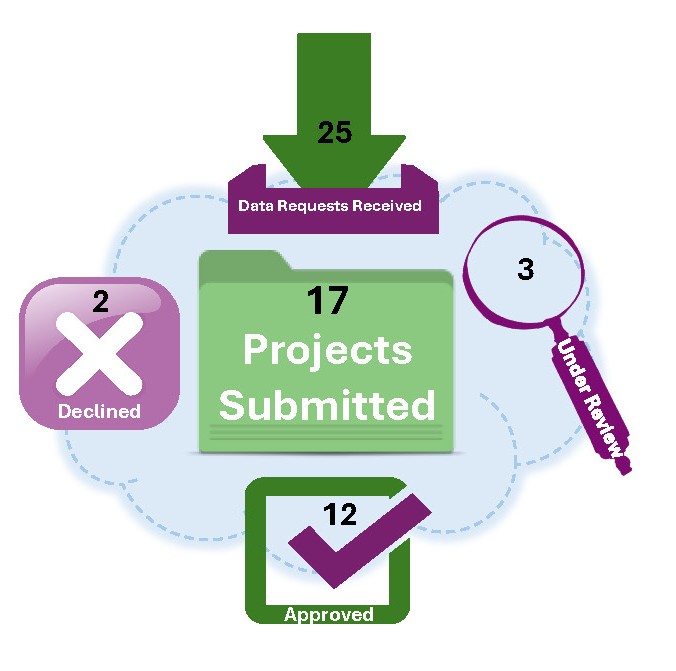
NCCR Data Platform Highlights
For more information about the NCCR Data Platform, visit Home – NCCR Data Platform.
Mark your Calendar
April 27, 2026 – Webinar: CCDI Pediatric, Adolescent, and Young Adult Rare Cancer Study. Register here.
May 21, 2026 – Driving Broad Impact of Cancer Research Together: NCI Office of Data Sharing Showcase. Register here.
June 23-25, 2026 – The 2026 NAACCR Annual Conference (virtual) will exhibit a session titled NCCR Research Use Cases. To register, please go to the NAACCR Conference website.
November 16 – 18, 2026 – NCI Data Jamboree: Enhancing Data Sharing and Utility to Advance Cancer Research. Data Jamboree website.
What to Read Next

NAACCR Launches New Interoperability Resources Webpage
Streamline your understanding of interoperability in healthcare, public health, and research with NAACCR’s new webpage. Find links to standards, policies,…

NAACCR Surgery Code Crosswalks Enable Analysis Over Time
Submitted on behalf of the NAACCR Surgery Code Crosswalk Task Force Background If you are familiar with cancer registry operations,…
Beyond Definition: First Annual Catchment Area Data Conference
In early December, NCI sponsored the first conference of its kind—the Catchment Area Data Conference – Beyond Definition, hosted by…