

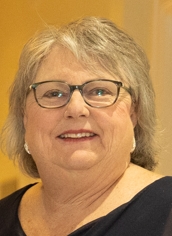
For some, ‘My Cancer Counts’ means being counted not just once, but twice – or more. Marianne Luettschwager was diagnosed first with breast cancer at age fifty and, thirteen years later, with kidney cancer. In her own words, Marianne reflects on her cancer diagnoses, and what it means that her Cancers Count.
What were some of the biggest challenges you faced during your cancer journey and what helped you to get through them?
The biggest challenge came during the disease-free intervals—those quiet stretches when treatment had paused, but uncertainty had not. I had to learn to live without the reassurance provided by the constant presence of clinical support and without the distraction of moving from one treatment to the next. In that silence, recovery meant learning to trust that not every ache or pain signalled a new diagnosis.
Were there moments of hope, encouragement, or unexpected support along the way?
That old adage—when God closes a door, He opens a window—proved true once again. My husband lost his job the very week I was diagnosed with breast cancer. Yet in that difficult timing, there was an unexpected grace: for the next eleven months, he was home to drive me to appointments, cook for the children, and keep our household running.
Many people don’t realize that their cancer diagnosis becomes part of cancer registry data used to improve care and research. How does it feel to know your experience may help others in the future?
Knowing that my medical history can help others is an added blessing. It can offer people hope and, quite literally, support changes in the care they receive. When I was diagnosed with breast cancer in 2008, it was considered stage IIA based on the tumour size. If I were diagnosed today, it would be classified as stage I because of my triple-positive biomarker profile. Then, in 2021, when I was diagnosed with kidney cancer, I benefited from robotic-assisted surgery. The changes in cancer care are mind-blowing—lifesaving and quality of life-preserving.
What does the idea “working together to make every cancer count” mean to you?
It means that we must remain vigilant and committed to educating and guiding those who control funding for cancer prevention, cancer screening, and cancer care, so that future generations will continue to benefit—until, one day, there is no longer any need for a cancer registry.
What message would you like to share with the people who work behind the scenes in cancer research, registries, and public health?
To those working tirelessly to collect the data that will help detect, treat, and ultimately prevent cancer, I want them to know that they are not separate from the cancer registry community—they are its lifeblood.
Is there anything about your cancer journey that we didn’t ask about that you think is important to share?
Each person finds their own way to cope. For me, it was my sense of humour, even in the darkest and scariest moments. Try to draw on whatever feels most true to you and let that be the source of your strength. There is no inappropriate comment, thought, or even action if it helps sustain optimism, kindness, and hope.
Population-based cancer data, collected and curated by cancer registries, is the only source that counts every cancer in the US and Canada. That means everyone is represented, and every person affected by cancer makes a difference in the fight against cancer. MY CANCER COUNTS aims to raise public awareness of the value of population-based cancer data through the sharing of personal stories of the people behind the data. NAACCR is deeply grateful to the individuals who have shared their stories as part of MY CANCER COUNTS.
Tags: My Cancer Counts, Patient Stories
What to Read Next

RDU NAACCR Talks Work Group Seeks New Members
The Research and Data Use (RDU) NAACCR Talks Work Group is seeking new members. NAACCR Talks are scheduled on Mondays…

New Workgroup Gears Up to Address Data Quality Issues With Geocoded Data
Health disparities are well documented using cancer registry data. And cancer registry data are essential to the evidence-based solutions approach…

EditWriter6 – New User Features
Overview EditWriter is a software program developed by the National Program of Cancer Registries (NPCR) to create, modify, and manage…